No products in the cart.
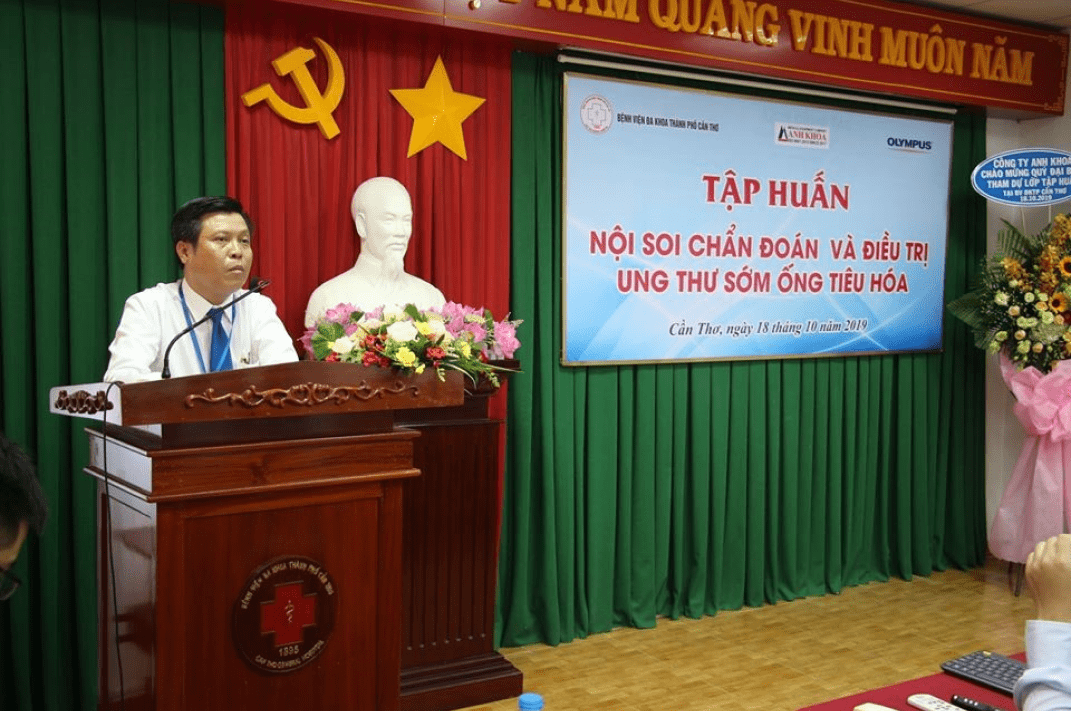

The training course with Japanese experts was held on October 18, 2019, by Can Tho General Hospital in collaboration with the Department of Digestive Endoscopy of Cho Ray Hospital and the Vietnam Endoscopy Association.
Attending the training course were Dr. Ho Dang Quy Dung, President of the Vietnam Endoscopy Association; Dr. Huynh Minh Phu, Deputy Director of the Hospital; representatives of Anh Khoa Medical Equipment Company Limited, Olympus Company and more than 50 other delegates.
 Japan is renowned for having the highest rates of early detection and treatment of stomach cancer in the world. This training course aims to help standardize clinical procedures at Can Tho City General Hospital as well as other hospitals in the Mekong Delta region. The procedures include endoscopic techniques, sterilization to ensure patient safety, and the development of high-quality endoscopy services, particularly for screening, diagnosing, and early treatment of gastrointestinal cancers. These improvements are expected to reduce treatment costs, extend patient survival, and alleviate the burden on higher-level hospitals.
This training is part of a scientific cooperation program, focusing on staff training and technology transfer from leading Japanese experts to Vietnamese doctors, specifically those at Can Tho City General Hospital, in the field of digestive endoscopy.

Additionally, digestive endoscopy allows doctors to closely observe the mucosal layer of the esophagus, stomach, and detect even very small lesions. If any abnormal signs are found, a biopsy can be performed to determine the presence of cancer cells.
Cancer screening is crucial for early detection, prevention, and effective treatment planning. Digestive endoscopy refers to various procedures used to examine the stomach, duodenum, colon, and rectum. It is one of the most advanced methods available today for accurate and straightforward diagnosis of gastrointestinal disorders. Notably, digestive endoscopy can also detect early-stage dangerous conditions related to the digestive system, such as rectal cancer, stomach cancer, and duodenal cancer.
The endoscopic procedure usually lasts from 10 to 15 minutes. In some special cases, doctors may need to collect cell samples to test for Helicobacter pylori bacteria, which can assist in early cancer diagnosis, potentially extending the duration of the procedure.
To perform a digestive endoscopy, the doctor uses a thin endoscope equipped with a camera and light source. The endoscope is inserted through the nose or mouth to examine the upper digestive tract, including the esophagus, stomach, and duodenum (the beginning part of the small intestine).

In addition, digestive endoscopy allows doctors to meticulously examine the mucosal lining of the esophagus and stomach, aiding in the detection of even the smallest lesions. If any abnormalities are found, a biopsy can be performed to determine the presence of cancer cells.
Immediately after the training session, the experts and doctors conducted live endoscopic demonstrations on patients being treated at Can tho City General Hospital.


Leave a comment